
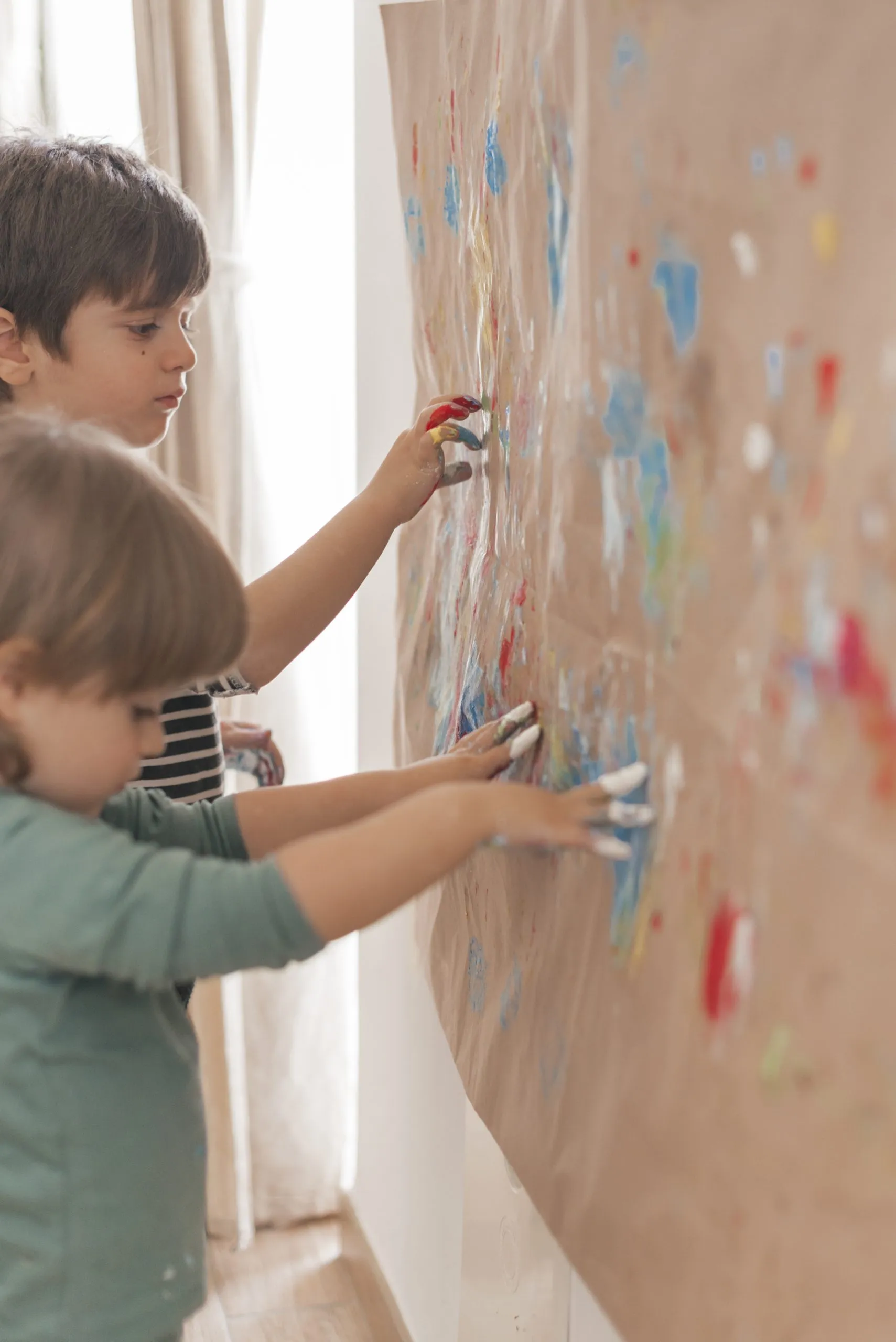
Children’s artwork is often one of the most visible parts of early learning. Families delight in colourful paintings, collages, and clay creations displayed proudly on walls or sent home at the end of the day. Yet, behind every piece of art is a story, not of the finished product, but of the child’s experience. This is where process art takes centre stage.
Process Art vs. Product Art
Product art is outcome focused. It often involves a predetermined design, where children follow instructions to replicate a teacher’s example, for instance, every child creating the same “perfect” paper plate snowman. While the end result may look neat, the process often leaves little room for creativity, individuality, or problem solving.
In contrast, process art prioritises the experience of creating. The focus is not on what the final piece looks like, but on the exploration of materials, ideas, and self expression. A process art activity might involve children experimenting with clay, mixing colours with paint, or arranging loose parts in unique ways. No two artworks look the same, because each reflects the child’s choices, discoveries, and imagination.
Why Process Art Matters in Early Learning
- Encourages Creativity and Critical Thinking - When children are free to explore without a prescribed outcome, they learn to take risks, make decisions, and think independently. This builds creativity, a skill that extends far beyond the art table and into problem solving in everyday life.
- Honours Individuality and Voice - Each child comes with their own perspective, interests, and ideas. Process art gives them the freedom to express themselves authentically. A splash of red paint, a scribble across the page, or a carefully placed feather each tells a story about the child behind the work.
- Supports Social and Emotional Development - The act of creating can be joyful, calming, and empowering. Children experience pride in their choices and learn that their ideas matter. This fosters confidence and resilience while reducing the fear of “making mistakes.”
- Promotes Holistic Learning - Process art integrates a range of developmental skills, fine motor control, sensory exploration, language development, and even early mathematics through patterns, shapes, and measurement. It is learning disguised as play.
- Fosters Lifelong Engagement with the Arts - When children experience art as open ended and self driven, they are more likely to enjoy it and carry that appreciation with them. Product art, in contrast, can sometimes discourage children who feel they “can’t draw” or “aren’t good at art.”
Bringing Process Art into Early Childhood Settings
Educators can champion process art by:
- Offering a variety of open ended materials, paints, clay, collage items, natural materials, and loose parts.
- Asking open ended questions such as “What do you notice when the colours mix?” rather than praising the finished product.
- Displaying artworks in ways that highlight the child’s process, through photos, quotes, or documentation, rather than focusing only on the “pretty” end result.
- Avoiding templates or step by step crafts where every child’s work looks the same.
A Shift in Perspective
For families and educators alike, shifting the focus from product to process may take time. It’s natural to want something tangible to admire. Yet, when we value the messy hands, the thoughtful experimentation, and the imaginative play that happen during creation, we are honouring the true purpose of art in early childhood, to nurture curiosity, creativity, and the joy of discovery.